1
Turn the Circuit On
Voltage drop testing only works properly when the circuit is under load.
Electrical Hub • Diagnostics
Voltage drop testing helps you find hidden resistance in power and ground circuits. It is one of the best ways to catch bad connections, corrosion, weak grounds, and cable problems under load.
Standardized technician view
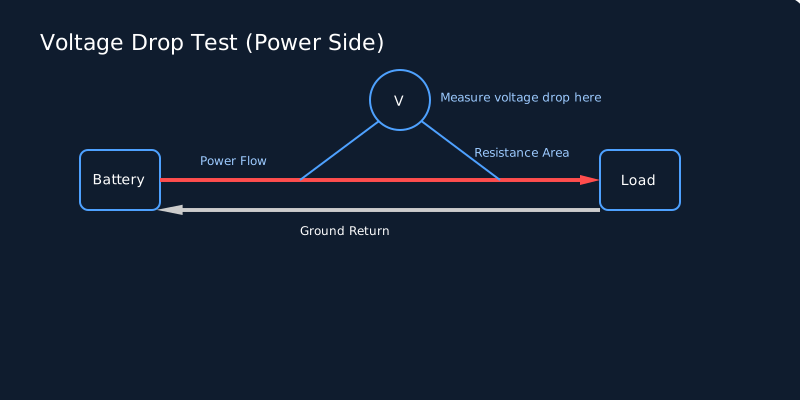
Simple diagnostic view
Voltage drop testing only works properly when the circuit is under load.
Measure across the cable, connection, switch, or ground path you want to test.
A low reading usually means the path is healthy. A higher reading points to resistance.
Move section by section until the excessive voltage drop appears and isolate the bad spot.
Where voltage drop testing saves time
Symptom: Engine cranks sluggishly even with a battery that seems charged.
Likely cause: High resistance in the positive cable, ground cable, or starter connections.
Check first: Voltage drop across battery positive to starter and battery negative to engine block while cranking.
Symptom: Lights are weak or get worse when other loads are turned on.
Likely cause: Bad ground or resistance in the power feed.
Check first: Voltage drop on both the power side and ground side of the headlight circuit.
Symptom: Hard starting, low fuel pressure, or weak pump operation.
Likely cause: Resistance in wiring, relay contacts, fuse connections, or ground.
Check first: Compare battery voltage to actual voltage at the pump under load.
General target ranges
Try to keep drop very low, often around 0.1V or less on a good connection.
Many ground circuits should stay around 0.2V or less under load.
Starter and other high-load cables may allow more, but excessive drop still points to resistance.
The closer the reading is to 0V, the less unwanted resistance is present.
What throws people off
Keep diagnosing
Tell us where the repair path needs work: missing services, unclear estimates, pricing confusion, OBD code gaps, repair guide gaps, trust concerns, or feature friction.
Help improve TorqueMech repair intelligence
Tell us what was missing, unclear, or hard to trust so we can improve estimates, OBD paths, and repair guides.