1
Control Side Receives Signal
Pins 85 and 86 energize the relay coil when voltage and ground are applied.
Electrical Hub • Wiring
A 5-pin relay uses a control side and a load side to switch power safely. Understanding pins 30, 85, 86, 87, and 87a helps you diagnose fans, fuel pumps, lighting, starter controls, and many other switched circuits.
Standardized technician view
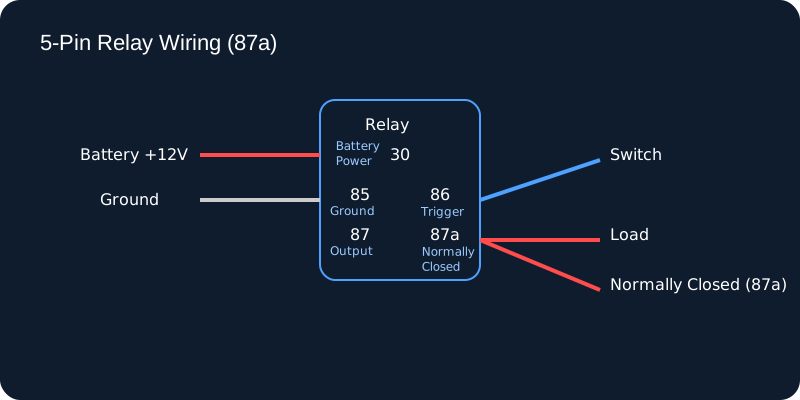
Simple switching view
Pins 85 and 86 energize the relay coil when voltage and ground are applied.
The energized coil pulls the internal contact away from 87a and toward 87.
Pin 30 connects to either 87a at rest or 87 when the relay is energized.
This lets a small control signal switch a higher-current load like a fan, pump, or lamp circuit.
Fast reference
Common feed. Usually battery power coming into the switched side of the relay.
One side of the coil. Often ground, depending on circuit design.
Other side of the coil. Often receives switched power or control voltage.
Normally open output. Connects to pin 30 when the relay is energized.
Normally closed output. Connects to pin 30 when the relay is at rest.
Common relay-related problems
Symptom: Fan does not turn on when engine temperature rises.
Likely cause: Relay coil not being energized, no output at 87, or failed relay contacts.
Check first: Confirm control signal at 85/86 and battery power at 30.
Symptom: No pump sound with key on and possible no-start condition.
Likely cause: Bad relay, no ECM control, blown fuse, or open load circuit.
Check first: Power at 30, coil activation at 85/86, and output at 87 during prime.
Symptom: Circuit remains active unexpectedly.
Likely cause: Stuck internal contacts, incorrect wiring, or misunderstanding of 87a function.
Check first: Whether the circuit is using 87 or 87a and relay state at rest.
Fast diagnostic direction
Pin 30 often should have battery voltage if the feed side is healthy.
Pins 85 and 86 need the correct power and ground relationship to energize the relay.
When energized, pin 87 should receive power from pin 30 in a standard normally open setup.
A click can help, but it does not prove the high-current contacts are carrying power correctly.
What causes confusion
Keep diagnosing
Tell us where the repair path needs work: missing services, unclear estimates, pricing confusion, OBD code gaps, repair guide gaps, trust concerns, or feature friction.
Help improve TorqueMech repair intelligence
Tell us what was missing, unclear, or hard to trust so we can improve estimates, OBD paths, and repair guides.