1
Battery Supplies Power
The battery provides 12V power to the starting circuit.
Electrical Hub • Wiring
Learn how battery power reaches the starter motor, what can go wrong, and where to test first when the engine will not crank normally.
Standardized technician view
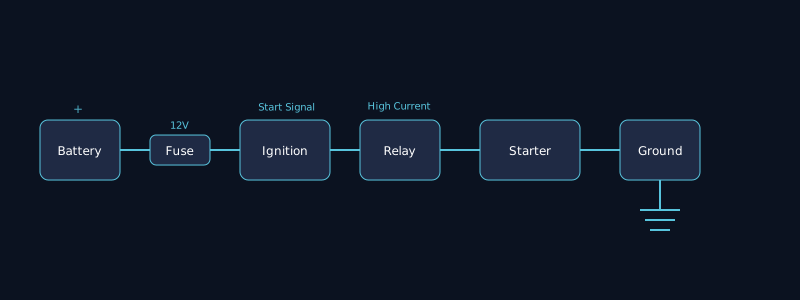
Simple power flow
The battery provides 12V power to the starting circuit.
Turning the key or pressing Start sends a signal to the relay or solenoid.
The relay allows high current to reach the starter motor safely.
The starter motor turns the engine so combustion can begin.
Common issues you may actually see
Symptom: Engine cranks slowly.
Likely cause: Weak battery, corroded cable, or high voltage drop.
Check first: Battery voltage and cable connections.
Symptom: You hear a click, but engine does not turn.
Likely cause: Weak battery, bad starter, or poor engine ground.
Check first: Voltage at starter and ground path.
Symptom: No click and no crank.
Likely cause: Faulty ignition switch, relay control issue, blown fuse, or neutral safety problem.
Check first: Start signal at relay and fuse power.
Use these as a fast reference
About 12.6V on a fully charged battery.
Usually should stay above ~10V.
Try to keep major cable drop under about 0.5V per side.
High drop on ground side often points to a bad engine or chassis ground.
Fast diagnostic direction
Keep diagnosing
Tell us where the repair path needs work: missing services, unclear estimates, pricing confusion, OBD code gaps, repair guide gaps, trust concerns, or feature friction.
Help improve TorqueMech repair intelligence
Tell us what was missing, unclear, or hard to trust so we can improve estimates, OBD paths, and repair guides.