1
Power Reaches the Load
The component receives battery voltage from the power side of the circuit.
Electrical Hub • Fundamentals
Ground circuits complete the electrical path back to the battery. Poor grounds can cause dim lights, slow motors, false sensor readings, intermittent faults, and no-crank problems.
Standardized technician view
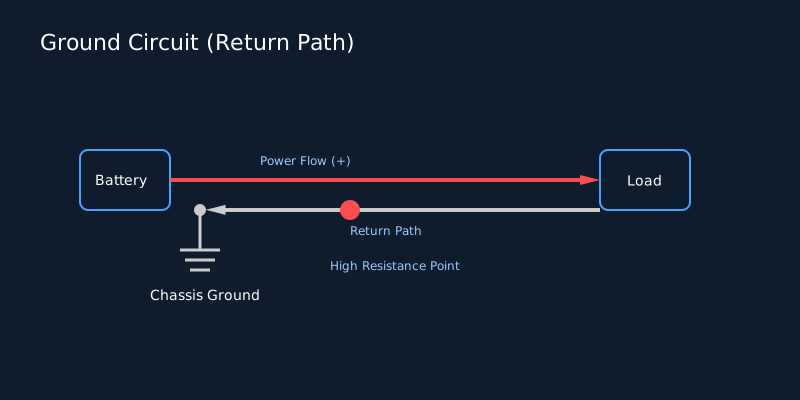
Simple return-path view
The component receives battery voltage from the power side of the circuit.
The bulb, motor, relay, or sensor uses electrical energy to do work.
Current returns through the ground path to battery negative.
Corrosion, loose fasteners, or damaged straps increase resistance and reduce performance.
Common failures seen in actual vehicles
Symptom: Lights are weak or yellow, especially at idle.
Likely cause: Corroded or loose ground near the headlight assembly.
Check first: Ground point condition and voltage drop on the ground side.
Symptom: Starter clicks but engine does not turn normally.
Likely cause: Bad engine block ground or failing ground strap.
Check first: Voltage drop from battery negative to engine block while cranking.
Symptom: Random warning lights, strange sensor behavior, or accessories acting erratically.
Likely cause: Shared ground point with corrosion or looseness.
Check first: Main body grounds and shared ground eyelets.
Fast reference for diagnosis
A good ground should be very close to 0V compared to battery negative.
Ground-side drop is usually best kept under about 0.2V on many circuits.
If voltage drop rises during cranking, suspect a poor engine ground or cable connection.
If the symptom changes when the ground wire or eyelet is moved, the connection may be faulty.
Where bad grounds usually show up
Keep diagnosing
Tell us where the repair path needs work: missing services, unclear estimates, pricing confusion, OBD code gaps, repair guide gaps, trust concerns, or feature friction.
Help improve TorqueMech repair intelligence
Tell us what was missing, unclear, or hard to trust so we can improve estimates, OBD paths, and repair guides.